
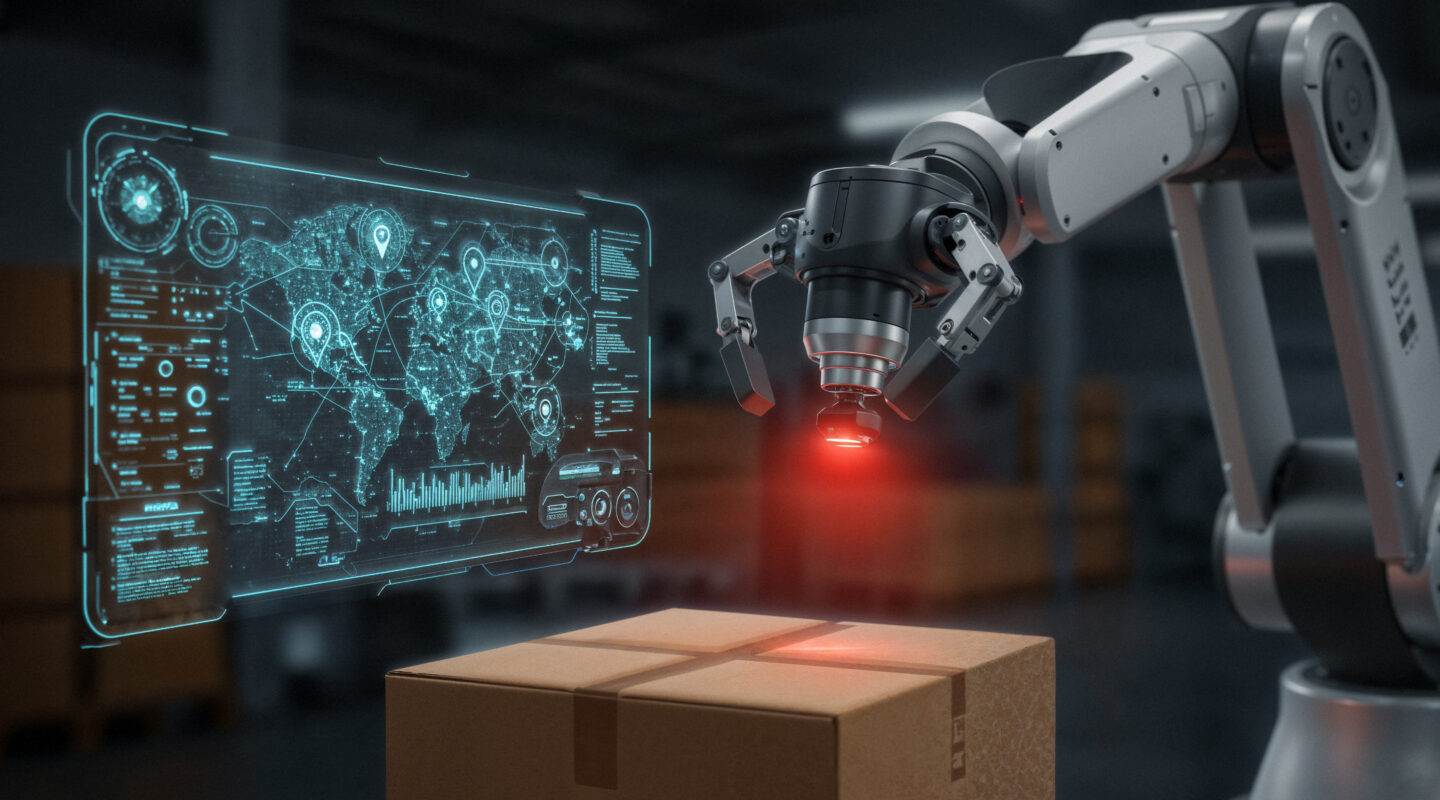
AI in supply chain management is no longer a side experiment. In 2025, it is becoming part of how companies forecast demand, manage inventory, plan transportation, and respond to disruption.
For years, supply chains were built around one central idea: keep costs low and inventory lean. That model worked well when conditions were relatively stable. Then volatility hit from every direction — geopolitics, climate events, shifting demand, and global disruption. As a result, many companies stopped asking only how to make the chain cheaper and started asking how to make it more resilient. The World Economic Forum has described this broader shift toward supply chains that balance cost, resilience, agility, and sustainability.
That is where AI in supply chain management starts to matter in a practical way.
Why AI in supply chain management is becoming a real business tool
The biggest change is not that AI suddenly became magical. The change is that companies now have more usable data, better cloud infrastructure, stronger models, and more pressure to make decisions faster.
McKinsey notes that in distribution operations, AI can reduce inventory levels by 20 to 30 percent and logistics costs by 5 to 20 percent when used for planning, inventory, and network decisions. That does not mean every company will get those results automatically. It does mean the technology is already proving useful in real operating environments.
So the conversation has shifted. AI in supply chain management is no longer about whether it sounds promising. It is about where it creates the clearest value first.
What AI is actually doing inside supply chains
When people say “AI,” it can sound vague. In supply chains, the use cases are much more concrete.
1. Better demand forecasting
Traditional forecasting leaned heavily on past sales. That still matters, but it is often not enough in a volatile market.
AI can combine internal and external signals much faster: historical demand, promotions, pricing shifts, weather patterns, and other contextual inputs. The result is not perfect prediction, but a more adaptive forecast that helps companies make fewer expensive mistakes.
McKinsey’s distribution research points to AI-based improvements in planning and inventory as one of the clearest sources of value today.
2. Smarter warehouse decisions
Warehouses are not just storage locations anymore. They are dynamic environments where timing, labor, equipment, inventory placement, and order flow all interact.
AI helps coordinate these moving parts more effectively. It can improve slotting, prioritize tasks, adjust workflows, and support labor and capacity decisions based on live conditions rather than fixed assumptions. McKinsey also notes that AI tools can unlock additional warehouse capacity when variability and resource constraints are managed more intelligently.
3. More efficient transportation planning
Transportation remains one of the most expensive parts of supply chain operations.
AI supports route optimization by looking at traffic, weather, delivery windows, vehicle constraints, and changing network conditions at the same time. That matters because the best route is not always the shortest one. It is the one that creates the best operational outcome under real conditions.
4. Better scenario planning and risk response
One of the strongest use cases for AI in supply chain management is not just automation, but better preparation.
Companies increasingly need to test “what happens if” scenarios: a supplier delay, a blocked lane, a sudden tariff, a demand spike, a plant outage. The World Economic Forum has highlighted the growing importance of advanced scenario planning and digitally enabled supply chain decision-making as companies adapt to more volatile conditions.
That is where AI becomes useful not because it predicts the future perfectly, but because it helps teams assess options faster and act earlier.
Why many supply chain AI projects still disappoint
The biggest issue is rarely the model itself.
More often, the problem is the environment around it: fragmented systems, inconsistent data, weak process design, or teams that do not trust what the system produces. In practice, three things usually get in the way:
The first is poor data quality and disconnected systems.
The second is low process readiness.
The third is trying to scale too early, before one use case is actually working well.
That is why AI in supply chain management should not be treated as just another feature. In most cases, it is an architecture and integration problem as much as an analytics one.
How to start without overcomplicating it
The worst way to begin is with a giant transformation promise.
A more practical approach is staged.
First, clean up the data and the most critical integrations.
Then, choose one use case where the business value is visible: demand planning, routing, one warehouse process, or a single control point.
Then, scale only what has already proven useful.
That is usually how AI in supply chain management starts working in the real world — not through one dramatic rollout, but through smaller decisions that build confidence over time.
Where this is heading next
The next shift is toward systems that do more than recommend.
That does not mean fully autonomous supply chains overnight. It means AI tools that can trigger actions inside defined boundaries: reprioritize, reroute, flag, adjust, or initiate a next step without waiting for every manual instruction.
McKinsey’s 2025 AI survey suggests that agentic AI is still in early scaling stages across business functions, including supply chain and inventory management. So this is real, but not yet evenly mature.
The companies that will benefit most are not the ones that remove people fastest. They are the ones that combine algorithmic speed with human control in the places that matter.
Conclusion
In 2025, AI in supply chain management is less about hype and more about resilience, speed, and better judgment under pressure.
Where supply chains once focused mostly on cost reduction, they now need to deal with uncertainty as a permanent condition. That is where AI is proving useful: not because it eliminates uncertainty, but because it helps companies see more clearly, respond faster, and make fewer expensive decisions too late.